

Why Commercial Property Claims Are Often More Complicated Than Expected
Commercial property insurance is designed to protect businesses from significant financial loss across a wide range of commercial claims. However, many business owners discover after a loss that their coverage is narrower than they believed.
This often stems from policy exclusions that are buried in complex wording and not fully explained at the time of purchase.
Understanding these exclusions before a claim arises is critical within the broader claim process. When overlooked, they can substantially reduce payouts or result in partial or full claim denials.
What Policy Exclusions Mean in Commercial Insurance
Exclusions define circumstances where coverage does not apply, even when physical damage has occurred. In commercial policies, exclusions are often broader and more detailed than those found in residential insurance.
Businesses may assume that visible damage automatically qualifies for coverage, similar to assumptions often made in homeowner claims.
In reality, insurers closely examine cause, condition, and maintenance history before determining whether an exclusion applies.
Hidden Exclusion 1: Wear and Tear
How insurers interpret wear and tear
Wear and tear refers to gradual deterioration resulting from normal use, aging, or lack of upkeep.
Commercial insurers frequently rely on this exclusion to deny claims involving roofing systems, plumbing, HVAC equipment, and building envelopes.
Even when sudden damage is present, insurers may argue that long-term deterioration contributed to the loss, limiting coverage.
Why this exclusion impacts payouts
When wear and tear is cited, insurers may pay only for resulting damage, not the underlying component.
These disputes commonly contribute to underpaid insurance settlements. This distinction can dramatically reduce claim settlements.
Hidden Exclusion 2: Improper Maintenance
Maintenance obligations in commercial policies
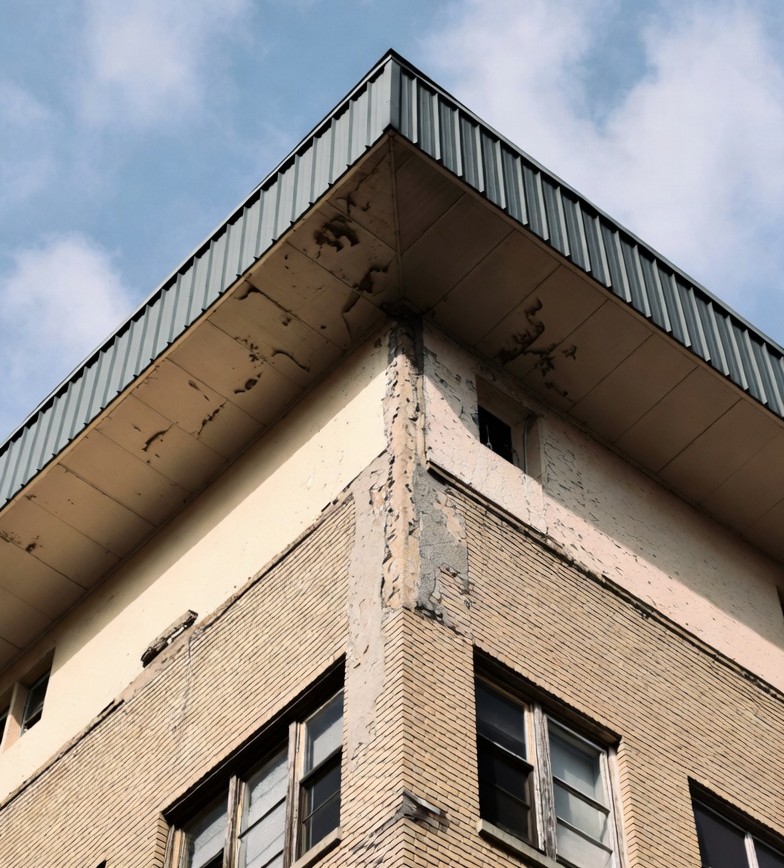
Most commercial policies require property owners to maintain buildings in good condition. Failure to meet these obligations can trigger exclusions related to neglect or improper maintenance.
Insurers may request maintenance logs, inspection reports, and repair histories to support their position.
Common dispute scenarios
Claims involving water intrusion, structural damage, or equipment failure often hinge on whether maintenance was adequate.
Similar disputes arise in burst pipe or flood water damage claims. Disagreements in this area frequently lead to reduced settlements.

Hidden Exclusion 3: Pollution and Contamination
What qualifies as pollution
Pollution exclusions extend beyond industrial contamination. They may include mold, bacteria, chemical seepage, or airborne particulates.
Business owners are often surprised to learn that cleanup, remediation, and testing costs may be excluded even when physical damage is otherwise covered, as seen in many water damage insurance claims.
Financial implications
Pollution-related exclusions can leave businesses responsible for extensive remediation costs, particularly in older or mixed-use properties.
Hidden Exclusion 4: Gradual Damage
How gradual damage differs from sudden loss
Many policies cover sudden and accidental damage but exclude losses that occur gradually over time. Slow leaks, ongoing moisture intrusion, or progressive structural movement often fall into this category.
Insurers may argue that the timing of damage places it outside the scope of coverage.
Documentation challenges
Proving when damage began can be difficult, especially in large commercial properties, which can also contribute to delays explained in why insurance claims get delayed. Without clear evidence, insurers may rely on this exclusion to limit payment.
Hidden Exclusion 5: Design, Construction, or Material Defects
Defects versus insured damage
Commercial policies commonly exclude losses caused by faulty design, workmanship, or materials. This exclusion applies even when defects were not apparent at the time of construction.
Insurers may separate the cost of correcting defects from the cost of repairing resulting damage, reducing overall recovery.
Complex claim evaluations
Determining whether damage stems from a defect or an insured event often requires expert analysis. Disagreements in this area are common in high-value commercial claims.
How Exclusions Are Applied During the Claims Process
Exclusions are rarely applied in isolation. Insurers often combine multiple exclusions to justify reduced payouts.
Policy interpretation, expert opinions, and documentation quality all influence how exclusions are enforced.
Steps Business Owners Can Take to Reduce Exposure
Proactive planning helps minimize the impact of exclusions.
- Review policies regularly with a focus on exclusions
- Maintain detailed inspection and maintenance records
- Document property condition before and after incidents
- Address minor issues before they escalate
- Seek independent review when claim scope is disputed
Preparation strengthens a business’s position when exclusions are raised.
When Independent Claim Review Becomes Important
Commercial property claims involving exclusions often require careful policy interpretation.
Independent claim review can help identify whether exclusions are being applied appropriately and whether coverage exists for resulting damage. Experienced public adjusters often assist with these evaluations.
Early involvement may prevent unnecessary disputes and underpayment.
Why This Matters to Policyholders
Hidden exclusions can significantly affect commercial property insurance recoveries.
Business owners who understand how exclusions work, how insurers apply them, and how to prepare documentation are better positioned to protect their financial interests and pursue fair claim outcomes.
Policyholders may choose to book an appointment for independent claim review.