


Navigating an Undervalued Home Insurance Claim for Your Luxury Property
Experiencing damage to your high-value home is disruptive enough without the added stress of an undervalued home insurance claim.
For discerning policyholders, a lowball offer from your insurer can feel like a betrayal of trust, especially when you’ve diligently paid significant premiums for comprehensive coverage.
When your luxury residence, with its unique architectural features, high-end finishes, or extensive smart home systems, is not assessed at its true replacement cost, it can leave you facing substantial out-of-pocket expenses.
This is a common and frustrating challenge when dealing with an undervalued home insurance claim, but it is one you do not have to face alone.
1. Recognize the Signs of an Undervalued Claim
The first step in addressing an undervalued claim is to identify the red flags.
Often, an insurer’s initial estimate might seem suspiciously low compared to the actual cost of repairs or replacement for a high-value property.
Perhaps the adjuster rushed their inspection, missing critical damage to intricate custom cabinetry or overlooking the full scope of structural issues.
You might also notice that the offer is based on “actual cash value” rather than the “replacement cost value” stipulated in your policy, which can dramatically reduce your payout by accounting for depreciation.
Any instance where the insurer’s assessment doesn’t align with your understanding of your property’s value and the extent of the damage should prompt immediate investigation.
To better understand potential pitfalls and protect your interests, it’s wise to learn about insurance pitfalls that can lead to an undervalued home insurance claim.
2. Document Everything Meticulously and Continuously
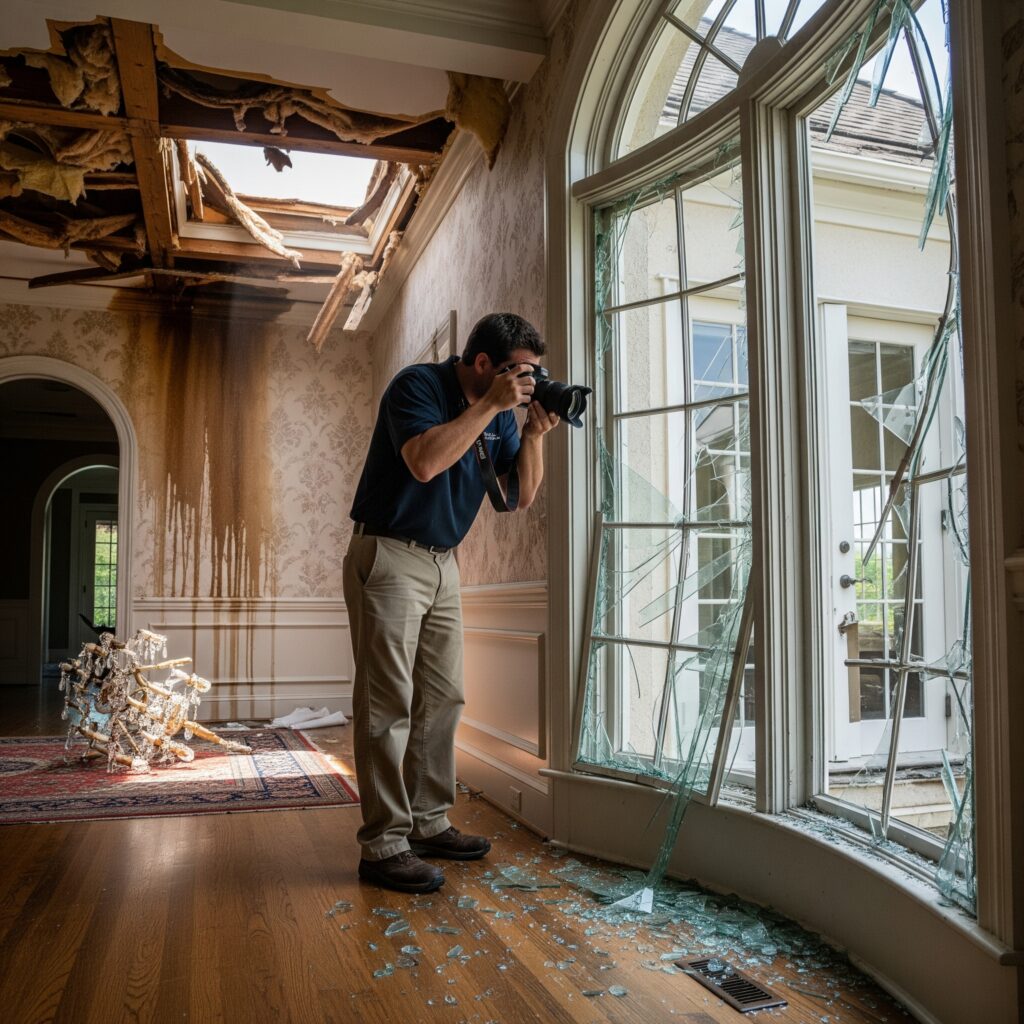
Comprehensive documentation is your strongest ally in disputing an undervalued claim.
Immediately after a loss, capture extensive photographs and videos of all damage, ensuring high resolution and detailed shots of unique features and high-end materials.
This documentation should be ongoing as repairs progress.
Create a thorough inventory of all damaged or destroyed contents, complete with proof of ownership, original purchase receipts, and any professional appraisals for art, jewelry, or collectibles.
This detailed evidence forms the bedrock of your argument and provides verifiable proof against an insurer’s low assessment. For more guidance on this crucial step, see our article on how to document and strengthen your insurance claim.
3. Obtain Independent, Expert Estimates
Do not rely solely on your insurer’s estimate; seek independent valuations.
Obtain multiple estimates from reputable contractors specializing in luxury home repairs and reconstruction.
These estimates should reflect the true cost of restoring your property to its pre-loss condition, accounting for specialized craftsmanship, high-end materials, and any necessary code upgrades.
For complex structural damage or unique architectural elements, consider engaging a forensic engineer or an independent appraiser.
Their expert reports can provide undeniable evidence to counter an insurer’s low offer, especially important for an undervalued home insurance claim.
Understanding the appraisal process in insurance claims can be particularly beneficial here.
4. Thoroughly Understand Your Policy’s Specifics
A deep dive into your high-value insurance policy is non-negotiable.
Unlike standard homeowner policies, high-value home insurance often includes specific endorsements for unique assets, extended replacement cost coverage, or guaranteed replacement cost, which are crucial when dealing with complex properties.
Familiarize yourself with every clause, particularly those related to valuation, depreciation, and the appraisal process. Understanding your rights and the insurer’s obligations as outlined in your policy will empower you during negotiations.
If terms like “replacement cost value” or “extended dwelling coverage” are present, ensure the insurer is applying them correctly.
For general questions about your policy, our FAQs page can offer valuable insights.
5. Formally Dispute the Insurer’s Assessment
Do not accept a lowball offer without a formal challenge.
Once you have your comprehensive documentation and a clear understanding of your policy, formally dispute the insurer’s valuation.
Submit a detailed letter outlining why you believe their offer is insufficient, referencing your evidence (photos, independent estimates, inventory) and citing specific sections of your policy that support your position. Request a reassessment of your claim, and be prepared to engage in direct negotiations.
Maintain a professional yet firm stance, ensuring all communications are documented. This proactive engagement is crucial for demonstrating your commitment to receiving a fair settlement for your undervalued home insurance claim.
To help ensure you have covered all necessary steps, refer to our maximizing your insurance claim: a checklist.
6. Be Prepared for Negotiation and Mediation
The negotiation process can be extended, requiring persistence.
Insurers may initially resist increasing their offer. Be prepared to present your case clearly and concisely, focusing on the factual evidence you’ve gathered.
If negotiations stall, your policy might include provisions for mediation or appraisal, which are alternative dispute resolution methods.
In mediation, a neutral third party helps facilitate an agreement. In appraisal, independent appraisers determine the amount of loss. Knowing your policy’s options and being ready to pursue them is key.
For those dealing with substantial commercial properties, understanding business interruption claims: how to get full compensation is also vital to protect your interests.
It can be particularly helpful to understand the business owner’s guide to navigating insurance claims for such scenarios.
7. Engage Expert Public Adjuster Assistance
When facing an undervalued claim on a high-value property, professional advocacy can make all the difference.
Public adjusters, especially those specializing in complex claims like Anderson Bettencourt, act solely on behalf of the policyholder.
They possess the insider knowledge of insurer tactics, legal-backed negotiation strategies, and expertise in damage assessment for luxury assets that typical adjusters may lack.
They can meticulously review your policy, accurately assess the true extent of damage, prepare a robust claim, and aggressively negotiate with the insurance company on your behalf.
This specialized support ensures that you are not outmatched by the insurer’s resources and that every aspect of your high-value loss is accurately represented to secure the maximum settlement you are legally entitled to.
You can learn more about our services tailored for high-value claims.
For a deeper dive into their role, consider reading the complete guide to hiring a public adjuster.
You may also find it helpful to understand how much public adjusters charge? Understanding costs & fees.
Finally, understanding the key differences between public adjusters vs. insurance company adjusters: who works for you? can clarify their distinct roles, especially when dealing with an undervalued home insurance claim.

Why This Matters to You, the Policyholder
For owners of high-value homes, an undervalued home insurance claim isn’t merely an inconvenience; it’s a significant financial threat that can impede your ability to fully restore your property and life.
Your home is not just an asset; it’s often a unique investment reflecting years of effort and significant resources.
When an insurer attempts to undervalue your claim, they are undermining your security and peace of mind.
By being proactive, meticulously documenting your loss, understanding your policy, and, crucially, enlisting the unparalleled expertise of a firm like Anderson Bettencourt, you assert your right to a fair and just settlement.
We are dedicated to fighting aggressively for your full entitlement, ensuring you can rebuild without compromise.
For more insights on handling various claim scenarios, you may find valuable information on external resources such as the Insurance Bureau of Canada.
If you have questions or need assistance with your high-value property claim, we encourage you to contact us.